Frank Spoel
The Book of MirrorsFrank Spoel is the man who confessed to killing Joseph Wieder, but his account does not settle the Wieder case so much as return it to uncertainty. A former patient at Trenton Psychiatric Hospital and a prisoner awaiting execution, Spoel describes a revenge attack that became murder, then recalls seeing Richard Flynn with Wieder and insists that another person entered the house afterward. The confession supplies a possible assailant; its gaps and conflicts with other testimony keep the crime’s full sequence unsettled.
Identity and Legal History
Spoel’s history with the law began before the Wieder murder. A school dropout with prior warnings for breaking the law, he was accused of beating a man who owned a small shop. The victim had a clean record, was thirty-eight, and had a wife and three children. Spoel, by contrast, faced the possibility of being tried as an adult and receiving five to eight years in prison. His court-appointed defender, Terry Duanne, tried to reach an agreement with the victim without success.
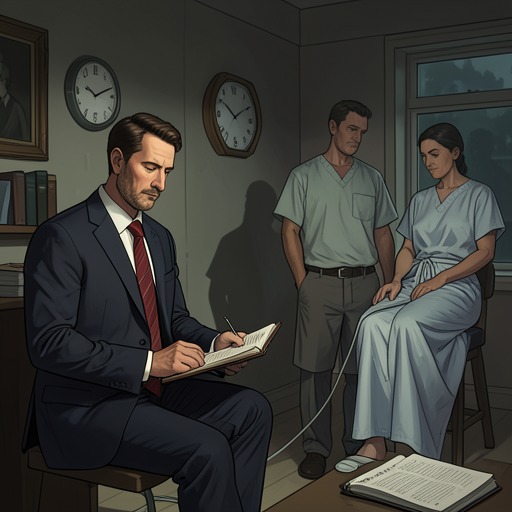
Duanne advised Spoel to pursue a medical finding of temporary insanity instead of an adult trial. According to Spoel, his lawyer suggested he knew the expert and implied that hospital discharge might come within a couple of months. Joseph Wieder examined Spoel, diagnosed bipolar disorder, and recommended commitment to a mental hospital. Spoel was sent to Trenton Psychiatric Hospital expecting a short stay; he later told the investigator that he spent two years there. That disparity between the predicted release and the actual period of confinement is part of the history Spoel brings to his account of Wieder: the professor had been both the clinician whose assessment sent him into the hospital and, in Spoel’s telling, the target of a later grievance.
The Confession and Its Circumstances
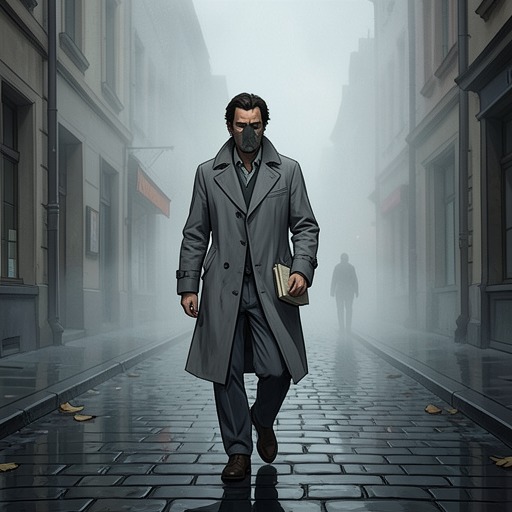
The investigator sought out Spoel after learning that he had confessed to Wieder’s murder a few months before his scheduled execution. The meeting took place at Potosi Correctional Center, where the investigator arranged access through Matt Dominis, a veteran at the prison. The investigator was not convinced by the confession. He suspected Spoel might be seeking attention after hearing that a California author wanted to include his name in a book, and noted that the murder had occurred soon after Spoel’s release from a mental institution, while he was in New Jersey and could have read about it in the newspapers. Those were the investigator’s reservations, not proof that the confession was false.
Before discussing the crime, Spoel said he had no one on the outside, had not seen his parents for more than twenty years, and did not know whether they were still alive. With four weeks left before his execution, he admitted that he was frightened. The investigator asked directly whether he had killed Wieder. Spoel said that he had. He described his purpose not as murder but as beating Wieder up: he wanted revenge for what he saw as a bad turn, not to kill him. He said the attack went wrong and made him a killer. The confession therefore distinguishes between the violence he intended and the death that resulted, while accepting responsibility for the outcome.
Spoel’s Account of the Night
Spoel told the investigator that he had watched Wieder’s house on several evenings. After the diner closed at ten, he would reach the back garden at about half past ten and observe the house. He noticed two recurring visitors: a young man who looked like a student and a tall, strongly built, scruffily bearded man who seemed to be a handyman. Neither, he said, stayed overnight.
On December 21, Spoel resigned from the bar and told its owner he was going to the West Coast. The owner paid him and gave him two packs of cigarettes. Spoel said he did not want to be seen in the area, so he went to Assunpink Creek and hid in a woodshed until dark. He then made his way to Wieder’s house, arriving at about nine in the evening. Wieder was in the living room drinking with the young man. When asked to describe him, Spoel could not do so beyond saying he looked like the other young men on campus who lived on their parents’ money. The investigator suggested the man was Richard Flynn; Spoel affirmed the general description when pressed, but his account did not identify Flynn independently by name.
Spoel’s story also includes a second arrival. The investigator proposed that Wieder might not have died immediately, and that someone coming to the house around midnight might have failed to call for help. He suggested Spoel could have mistaken wind rattling the door for a person entering. Spoel rejected that explanation. He insisted that someone had unlocked the door and walked inside. The account does not establish who that person was, what they did, or whether Spoel’s perception was accurate. It does, however, leave open a consequential interval between the attack and Wieder’s death.
Conflicting Testimony and Significance
Spoel’s recollection sits uneasily beside Derek Simmons’s account. Simmons placed himself behind the house that evening and described seeing Wieder with Flynn and Laura Baines, including an argument; Spoel described Wieder with Flynn but did not mention Baines or a disagreement. Simmons also said that he returned to check on Wieder the next morning and found the body. In a later confrontation, the investigator pointed out that the two men both claimed to have been hiding behind the house at nine o’clock, yet neither described encountering the other. Their versions differ not just over who was present, but over what happened in the hours around the killing.
Spoel’s confession cannot by itself resolve those discrepancies. He offered a motive—resentment toward Wieder—and admitted an intention to use violence, but the available account does not give a complete description of the attack. His identification of the young visitor is broad, and his claim about a later entrant remains unverified here. The investigator’s initial suspicion of a self-serving confession and Spoel’s own history of psychiatric confinement further frame how his testimony might be received, without proving either that he lied or that every remembered detail was reliable.
Spoel’s role in the investigation is thus double-edged. His confession appears to close the question of who attacked Wieder, yet his account draws attention to an unexplained entrance and a death that, according to the investigator, came two or three hours later. The difference between intending to beat a man and becoming his killer echoes the larger case’s unstable boundary between what witnesses remember, what they infer, and what can be established. Spoel provides a version of the night, but not a final, uncontested explanation of it.